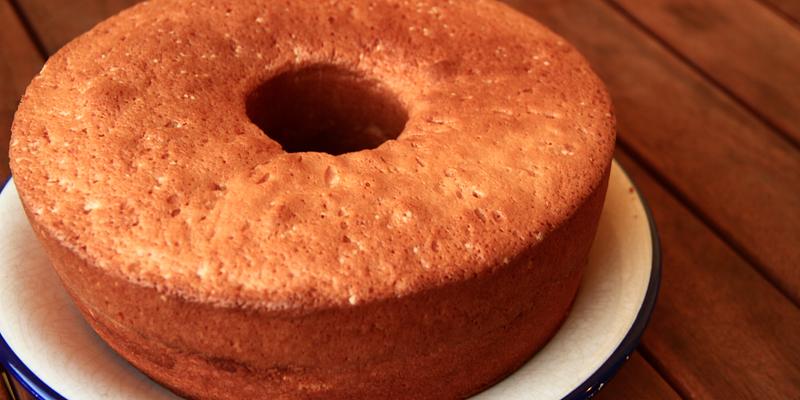
Where the name pão de ló comes from
Nobody can say where the word ló comes from.
The rest of the name is accounted for, because the rest of the name is a place on the map.
The cake spread through the country, each town began making it its own way and signing it with its own name: pão-de-ló de Ovar, de Alfeizerão, de Margaride, de Alpiarça.
The eleven pães-de-ló in Cozinha Tradicional Portuguesa
In Cozinha Tradicional Portuguesa, by Maria de Lourdes Modesto, the index lists eleven pães-de-ló, spread across six regions.[1]
Region | Name in the book |
|---|---|
Entre Douro e Minho | Pão-de-ló (Margaride) |
Entre Douro e Minho | Pão-de-ló |
Entre Douro e Minho | Pão-de-ló de Freitas |
Beira Baixa | Pão Leve ou Pão-de-ló |
Beira Litoral | Pão-de-ló de Ovar |
Beira Litoral | Pão-de-ló de Soure |
Ribatejo | Pão-de-ló de Alpiarça |
Estremadura | Pão-de-ló da Avó |
Estremadura | Pão-de-ló de Alfeizerão |
Estremadura | Pão-de-ló Saloio ou Pão-de-ló dos Casamentos |
Alentejo | Pão-de-ló |
Entre Douro e Minho has three.
Estremadura has another three in a row on the same page - the one from Alfeizerão, the grandmother's, and the saloio, which also goes by dos casamentos, the wedding one.
Beira Litoral has Ovar and Soure side by side.
In Beira Baixa the cake enters the index under two names, pão leve or pão-de-ló.
Ribatejo has the one from Alpiarça, and the Alentejo has its own, with no surname.
The results can be very different.
Some stay almost liquid in the middle and are eaten with a spoon; others rise tall and are cut into slices.
The base is always the same - eggs, sugar, flour and air - and what changes is the proportion between them and the time they spend in the oven.
If you have the book at home, reading the eleven entries one after another teaches more about what the word tradicional means than any single recipe.
And the book has a history to match what it holds: the recipes arrived by post, sent in by thousands of people to a television contest in 1961.
We told that story in The 3181 recipes Portugal sent in by post.
The pão de ló that went to Japan
In Nagasaki they sell a cake called kasutera (カステラ), also written castella,
made with eggs, sugar and flour.
The first Portuguese reached Japan in 1543, and the trade with Nagasaki lasted until 1639, the year the country closed itself off.[2]
Over that century of contact, merchants and missionaries carried what survived a long voyage: sugar, and with the sugar, sweets.
The Japanese came to know this one by the name of the land it said it came from: kasutera; it is what is left of pão de Castela, bread of Castile.[3]
The trade ended and the cake stayed. The house of Fukusaya, in Nagasaki, has made castella since 1624 and has never stopped; it says its founder learned the method from someone Portuguese.
Along the way, the Japanese recipe went its own way: it takes mizuame, a starch syrup,
and the coarse sugar - zarame - stays stuck to the bottom of the cake in crystals.
No fat of any kind appears in the ingredient list.[4]
What matters is what did not change. Castella is a dense, moist cake, a strong yellow.
It sits on the moist side of the family, the same side as Ovar and Alfeizerão, with one difference: castella bakes all the way through and cuts clean, and those two are left deliberately underbaked in the
middle.
Sources
- Maria de Lourdes Modesto, Cozinha Tradicional Portuguesa, Lisbon, Verbo
(ISBN 978-972-22-3089-6) - the index, which is where the table of eleven comes from. - Mark Cartwright, "Portuguese
Nagasaki", World History Encyclopedia,
29 June 2021 - the arrival of the first Portuguese in 1543 and the 1639 expulsion, which closed
the Nagasaki trade. - "Pão-de-ló: história e receita de um bolo
viajado",
Amass. Cook. - the cake's passage to Japan, and the pão de Castela that remains in kasutera. - Fukusaya (福砂屋), Nagasaki - the house's
founding date, 1624, the method learned from someone Portuguese, and the ingredients: eggs,
sugar, starch syrup and flour, with the coarse sugar that stays at the bottom.
Keep your family's recipe in your Culinari, with the quantities and the name you use for it at home.